

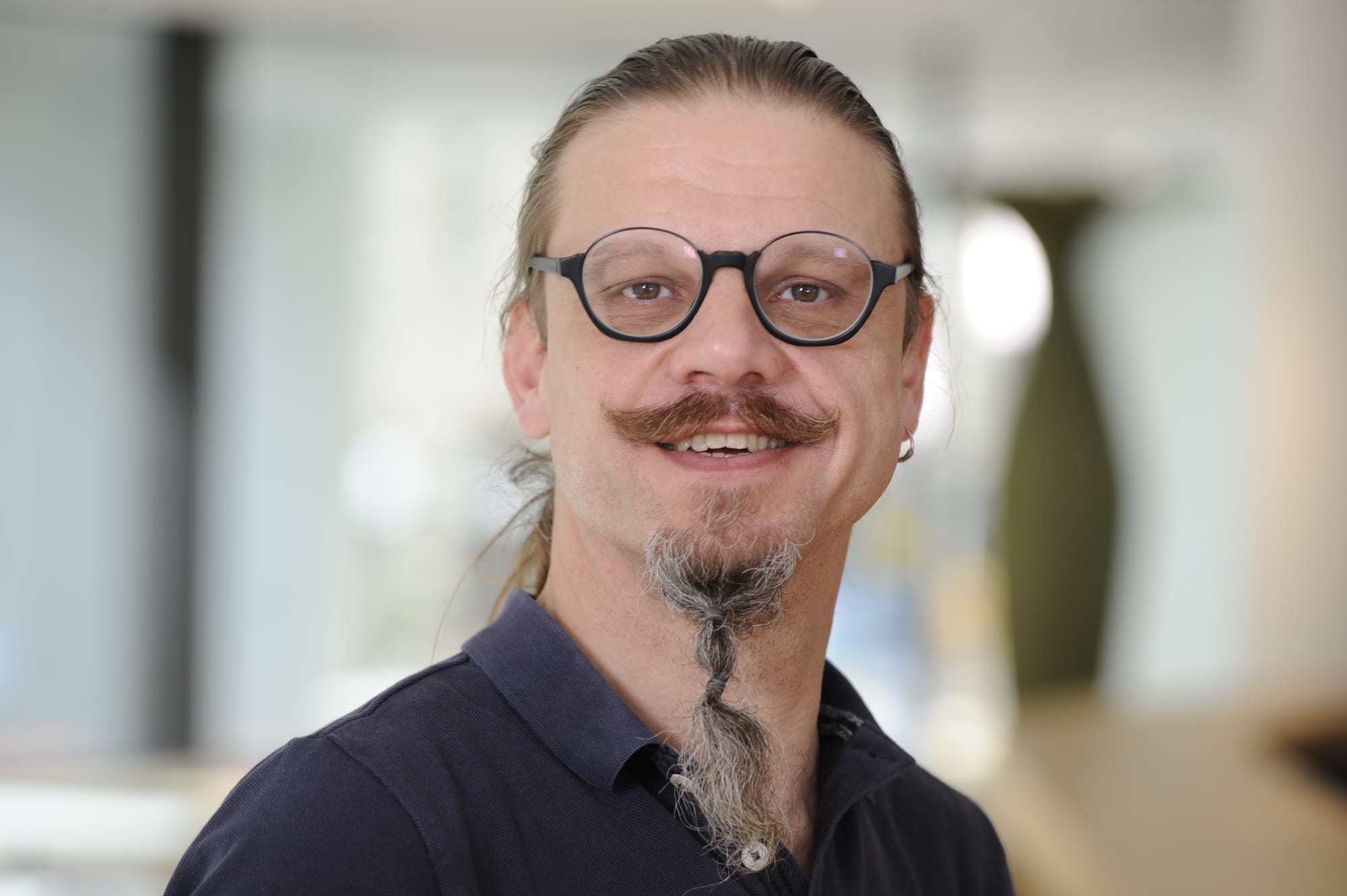
There are people who build their careers like a straight highway.
Mine looks more like a looped hiking trail: sometimes through sunny fields, sometimes straight into a swamp, always teaching me something I didn’t know I needed to learn.
I started in the helpdesk — back when computers still made noises and users still read error messages. I liked the work, even when it was messy. People came with frustration, panic, or embarrassment, and somehow I found myself enjoying the human puzzle more than the technical one.
Then I did what many of us do: I drifted into the technical world. Development, architecture, projects. The classic gravity of “career progression.”
It took me years to notice that while my skills were growing, the distance to people was growing faster. I became good at systems, but worse at seeing the human behind the system.
And that felt… wrong. Off. Like wearing someone else’s shoes.
Studying mediation and coaching started as a pragmatic decision. A nice extra qualification.
Instead, it rearranged something inside me.
I rediscovered what had made the helpdesk years strangely satisfying:
people were always the real center of the work, even when we pretended it was about technology.
The bits and bytes were easy. Predictable.
Humans weren’t—and that was the whole point.
Many employers and many years later, the circle closed. Today I work again with people: as a freelance coach, mediator, sounding board, or the person you call when the problems are too human for a ticket system and too complex for a slide deck.
And yes, I still love software development. I still write code, design systems, step into product owner shoes, or untangle projects that forgot what they were supposed to do.
The difference is: I no longer pretend the technical work makes sense without the human work.
If you’re looking for dogma, certification worship, or the One True Framework™—you won’t find it here.
This place is for mindset, ambiguity, contradictions, stories from reality, and some dry humor where appropriate.
Agile not as a process — agile as a way of thinking.
Or, if you prefer: as a way of stumbling forward without losing yourself.
Outside the professional bubble, I’m a husband, father, grandfather, collector of moments, reader, music lover and musician, cook, and the kind of person who still buys paper notebooks despite owning too many keyboards.
And because every story needs a contrast: here’s the predictable part.
If you want the factual, chronological, certificate-heavy, “proper” version of who I am —the alter‑ego with the slightly more polished version of me, speaking in complete sentences— you’ll find him over at: www.der-e-coach.de.
He does a good job keeping track of dates, institutions, and other administrative archaeology.
This space, however, is for the rest of me.